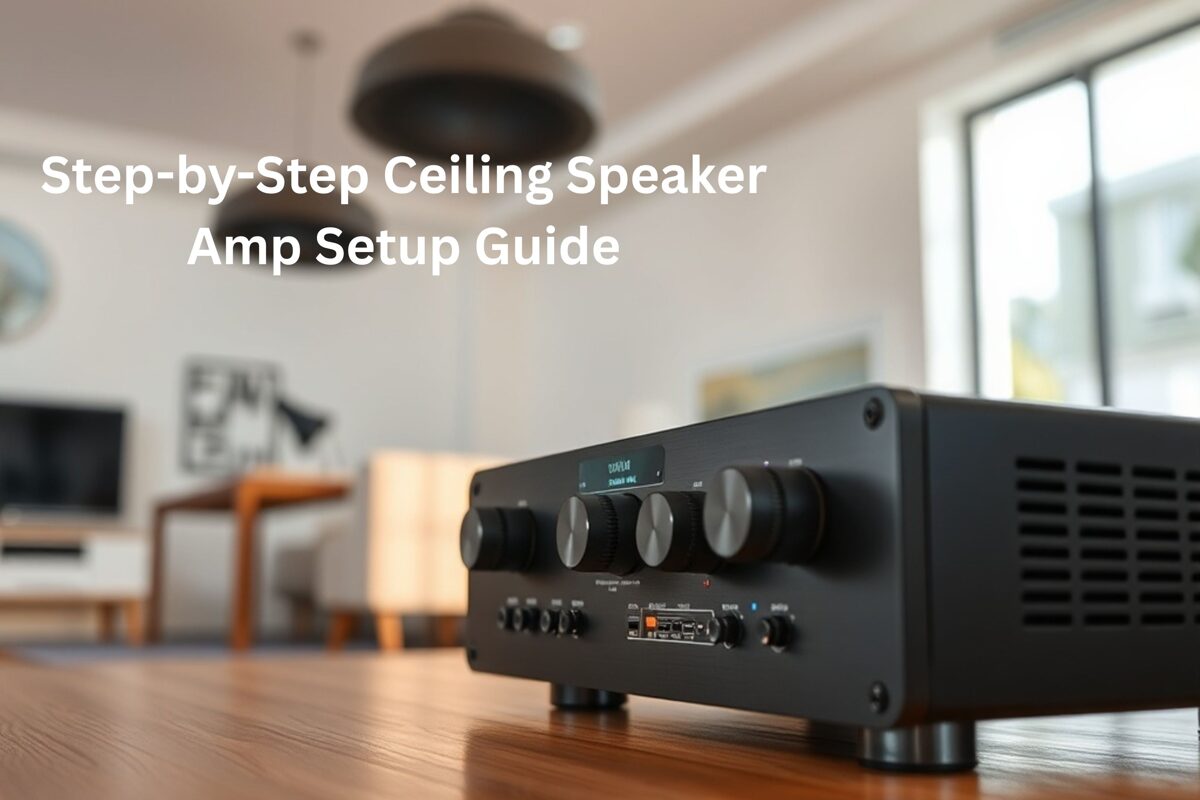
Step-by-Step Ceiling Speaker Amp Setup Guide
November 25, 2025 at 11:53 am,
No comments
This comprehensive guide, developed through 20 years of professional content expertise and hands-on audio installation experience, walks you through every critical step of establishing a ceiling speaker system that rivals professional installations. From initial planning and equipment preparation through final calibration and optimization, you’ll discover the technical knowledge and practical techniques that separate amateur attempts from truly exceptional results.
The modern ceiling speaker system encompasses far more than basic audio reproduction. Today’s installations integrate smart home audio capabilities, leverage distributed audio architectures serving multiple zones, and often incorporate advanced AV system integration software creating seamless control experiences. Understanding how audio amplifiers, in-ceiling speakers, and control systems interact ensures your installation delivers both immediate satisfaction and future-proof flexibility.
Whether you’re working with traditional low-impedance speakers, implementing efficient 70V audio systems for commercial applications, or creating hybrid residential configurations mixing different technologies, proper amplifier setup forms the critical foundation. From calculating speaker wattage requirements and ensuring proper impedance matching to running professional-grade speaker wiring and configuring sophisticated control interfaces, this guide provides the blueprint for exceptional ceiling speaker system performance.
Learn How to Wire, Install, and Power Your Ceiling Speakers Like a Pro
Why Professional Installation Practices Matter
The difference between mediocre and exceptional ceiling speaker systems rarely comes down to equipment quality alone—installation practices determine whether expensive components deliver their full potential or underperform due to preventable mistakes. Professional installers understand that proper amplifier power output management, meticulous speaker wiring practices, and systematic configuration create the foundation for reliable, high-quality audio reproduction.
Long-Term Reliability: Professional installation techniques ensure your ceiling speaker system operates flawlessly for decades. Proper wire gauge selection prevents voltage drop over long runs, appropriate impedance matching prevents amplifier damage, and systematic labeling simplifies future troubleshooting and modifications.
Optimal Audio Performance: Ceiling speakers performing below expectations typically suffer from installation issues rather than equipment limitations. Proper speaker placement following acoustic principles, phase-correct wiring maintaining proper polarity, and appropriate amplifier configuration maximizing available headroom transform mediocre sound into engaging listening experiences.
Safety and Code Compliance: Electrical work demands adherence to local building codes and safety standards. Professional practices using appropriately rated cables, maintaining proper separation from AC power lines, and following fire safety requirements protect both property and occupants.
The Professional Installation Mindset
Approaching ceiling speaker amp setup professionally means:
Methodical Planning: Document every aspect before starting physical work. Create detailed diagrams showing speaker locations, cable routes, equipment placement, and connection schemes. This upfront investment prevents costly mid-installation discoveries and ensures logical, serviceable installations.
Quality Tools and Materials: Professional results demand professional tools. Proper cable strippers, quality drill bits, stud finders, measurement devices, and testing equipment transform difficult tasks into straightforward procedures while ensuring consistently excellent results.
Testing and Verification: Professionals test at every stage—verifying cable continuity before pulling, checking polarity before connecting to amplifiers, measuring impedances before powering on, and systematically calibrating after installation. This disciplined approach catches problems early when corrections prove simple rather than discovering issues after completion.
Documentation: Create comprehensive as-built documentation showing final cable routing, connection schemes, equipment settings, and configuration details. Your future self (or subsequent technicians) will thank you when modifications, troubleshooting, or expansions become necessary.
Setting Realistic Expectations
Professional ceiling speaker system installation requires:
Time Investment: Plan 1-2 hours per speaker location for new construction with accessible attic spaces; 2-4 hours per location for retrofit installations requiring fishing wires through finished walls. Complex multi-zone amplifier configurations add several hours for programming and calibration.
Skill Development: First installations take longer as you develop techniques. Accept the learning curve—your second system will install much faster than your first as skills develop.
Budget Allocation: Professional results require appropriate investment in both equipment and installation materials. Budget 20-30% of equipment costs for installation supplies (cables, connectors, mounting hardware, tools) when performing DIY installations.
Understanding Your Ceiling Speaker System Components
Amplification Options
Integrated Amplifiers: Single-chassis solutions combining preamplification (volume control, source selection, tone adjustment) with power amplification. Options range from basic stereo amplifiers serving 2 speakers to sophisticated multi-zone amplifiers powering 16+ zones independently.
Separate Components: High-end installations often utilize separate preamplifiers/processors and power amplifiers. This approach enables mixing component qualities—using premium preamplification with adequate power amplification, or upgrading components independently.
AV Receivers: Modern home theater receivers serve dual purposes—primary surround sound for main listening areas plus zone outputs for distributed audio via ceiling speakers. Most receivers offer 2-4 additional zones beyond main room capabilities.
Class-D Amplifiers: Efficient modern designs delivering high amplifier power output (often exceeding 90% efficiency) with minimal heat generation. Compact form factors enable installation in space-constrained locations while maintaining excellent audio performance.
Speaker Types and Specifications
Passive Ceiling Speakers: Traditional designs requiring external audio amplifiers. Offer greatest flexibility in amplification selection and upgrade paths. Most residential and commercial installations utilize passive speakers for their proven reliability and sound quality.
Active Ceiling Speakers: Incorporate built-in amplification eliminating external amplifier requirements. Simplify certain installations but reduce upgrade flexibility and typically cost more per speaker than passive alternatives.
Speaker Impedance Ratings:
- 8-ohm speakers: Industry standard for residential applications
- 4-ohm speakers: Extract more power from capable amplifiers but reduce multi-speaker flexibility
- 70V speakers: Include transformers for 70V audio system constant-voltage distribution
Power Handling Specifications:
- Continuous (RMS) rating: Maximum power speaker handles continuously without damage
- Peak rating: Short-duration maximum (largely marketing specification)
- Sensitivity: Sound pressure level (SPL) produced by 1 watt input at 1 meter distance
Wiring and Connectivity
Speaker Wire Types:
- 16 AWG: Adequate for runs under 30 feet with 8-ohm speakers
- 14 AWG: Recommended for 30-60 foot runs or future-proofing
- 12 AWG: Required for runs exceeding 60 feet or 4-ohm speakers
- Plenum-rated: Necessary for cable runs through HVAC spaces per electrical code
Connection Methods:
- Bare wire: Most common—strip 1/4-inch insulation, insert into binding posts
- Banana plugs: Quick-disconnect convenience, professional appearance
- Spade connectors: Secure connection, difficult to accidentally disconnect
- Pin connectors: Space-saving option for high-density connections
Source Connectivity:
- Analog RCA: Universal connection for most audio sources
- Digital optical/coaxial: Prevents ground loops, maintains digital signal integrity
- HDMI ARC/eARC: Extracts audio from TVs to audio receivers
- Bluetooth/Wi-Fi: Wireless streaming eliminating physical source connections
Pre-Installation Planning and Preparation
Site Survey and Acoustic Assessment
Room Analysis: Evaluate each space receiving ceiling speakers:Dimensions and Geometry:
- Measure room length, width, ceiling height
- Note architectural features (vaulted ceilings, soffits, alcoves)
- Identify hard reflective surfaces (tile, glass, hardwood) versus absorptive treatments
- Document existing acoustic character (lively/reverberant vs. dead/absorptive)
Usage Patterns:
- Primary activities in space (critical listening, background music, home theater)
- Typical occupancy patterns (solo listening vs. group entertaining)
- Desired sound pressure levels (quiet background vs. party volume)
- Integration with other systems (lighting scenes, HVAC automation)
Infrastructure Assessment:
- Attic or ceiling cavity access for wire routing
- Existing electrical for amplifier placement
- Network connectivity for streaming or control systems
- HVAC ductwork, electrical, plumbing creating routing obstacles
Speaker Quantity and Placement Calculation
Coverage Pattern Method:
For distributed audio ambient coverage, calculate speaker spacing:
Formula: Speaker Spacing = Ceiling Height × 1.5 to 2.0Example: 8-foot ceilings suggest 12-16 foot speaker spacing for even coverage.
Critical Listening Positioning:
For stereo imaging or home theater ceiling speakers:
- Position speakers creating equilateral triangle with listening position
- Maintain 6-10 foot left/right separation depending on ceiling height
- Angle listeners toward center between speakers when possible
Multiple Speaker Calculations:
Large rooms may require 4, 6, or 8+ speakers. Distribute symmetrically when possible, maintaining even spacing for uniform coverage. Avoid positioning speakers directly over hard reflective surfaces without acoustic treatment.
Power Requirements and Amplifier Sizing
Per-Speaker Power Budget:
Background Music: 15-25 watts RMS power per speaker Active Listening: 30-60 watts per speaker Critical Listening/Home Theater: 60-150+ watts per speaker
System Total Calculation:
Multiply per-speaker requirements by total speaker count:
Example: 8-zone system with 2 speakers per zone (16 total) at 40W each requires minimum 640W total amplifier capacity.
Add 20-30% headroom for dynamic peaks and future expansion: 640W × 1.25 = 800W total system capacity recommended
Amplifier Selection Criteria:
- Total power meets or exceeds calculated requirements with headroom
- Amplifier channels sufficient for zone count (dedicated channels preferred)
- Impedance rating supports your speaker specifications
- Features match requirements (streaming, multi-zone control, room correction)
Tools and Materials Checklist
Essential Installation Tools:
- Stud finder (electronic model detecting wood, metal, AC lines)
- Drill with hole saw matching speaker diameter
- Fish tape or wire pulling tools (100+ foot capacity)
- Cable strippers and crimpers
- Multimeter for continuity and impedance testing
- Sound pressure level meter for calibration
- Measuring tape, level, pencil for marking
Installation Materials:
- Speaker wire appropriate gauge for longest run (buy 20% extra)
- Speaker connectors (banana plugs, spade connectors as preferred)
- Cable staples or clips (following code requirements)
- Conduit or smurf tube (for future-proofing or difficult spaces)
- Labels for both ends of every cable run
- Drywall repair supplies for access holes
- Fire-rated caulk (sealing penetrations per code)
Step-by-Step Amplifier Setup Process
Step 1: Equipment Placement and Ventilation
Location Selection Criteria:
Climate Control: Position audio amplifiers in climate-controlled spaces. Avoid garages, attics, or outdoor locations without weatherization. Temperature extremes reduce component lifespan and performance.
Ventilation Requirements:
- Minimum 3-inch clearance above amplifier for heat dissipation
- Front-to-back airflow (cool air intake at front, exhaust at rear)
- Avoid enclosed cabinets without supplemental cooling fans
- Rack-mounted equipment: leave 1U spacing between heat-generating components
Accessibility: Position equipment allowing service access. Future troubleshooting, upgrades, or modifications prove difficult when amplifiers install in cramped, inaccessible locations.
Acoustic Isolation: Separate amplifiers from critical listening areas when possible. Transformer hum, cooling fan noise, or hard drive sounds (in media servers) distract from listening experiences.
Electrical Infrastructure:
- Dedicated 20-amp circuit recommended for systems exceeding 1000W
- Power conditioning protects against surges and voltage irregularities
- Multiple outlets enabling staged power-up (sources before amplification)
Step 2: Source Equipment Connection
Analog Connections:
Connect audio sources to amplifier inputs using appropriate cables:
RCA Connections:
- Identify source component outputs and amplifier inputs
- Connect left channel (typically white) to corresponding input
- Connect right channel (typically red) to corresponding input
- Verify connections secure—loose connections cause noise and dropouts
Balanced XLR: Professional equipment may utilize balanced connections offering superior noise rejection over long cable runs.
Digital Connections:
Optical (Toslink):
- Remove protective caps from both cable ends
- Insert firmly into source optical output
- Connect opposite end to amplifier optical input
- Verify red light visible at connection confirming signal presence
Coaxial Digital: Standard RCA connection carrying digital audio signal. Use quality 75-ohm coaxial cable (not standard RCA cables) for best results.
HDMI Connections:
Modern AV receivers utilize HDMI for both audio and video:
- Connect source devices (Blu-ray, game console, streaming devices) to receiver HDMI inputs
- Connect receiver HDMI output to TV HDMI ARC/eARC input enabling TV audio return to receiver
Network Connections:
Streaming Integration:
- Connect amplifier Ethernet port to network router (wired preferred for reliability)
- Or configure Wi-Fi following manufacturer instructions
- Verify network connectivity accessing amplifier via smartphone app or web interface
Step 3: Speaker Load Calculation and Verification
Impedance Verification:
Before connecting speakers, calculate total load per amplifier channels:
Parallel Connection Formula (most common): 1/Total Impedance = 1/Speaker₁ + 1/Speaker₂ + 1/Speaker₃…
Example Calculations:
- 2× 8-ohm speakers parallel = 4-ohm load ✓ (safe for most amplifiers)
- 4× 8-ohm speakers parallel = 2-ohm load ✗ (unsafe for most consumer amplifiers)
70V System Calculations:70V audio systems use additive wattage instead of impedance:
- Sum all speaker tap wattages
- Verify total doesn’t exceed amplifier channel capacity
- Example: 100W 70V channel powers 25× speakers at 4W taps = 100W total ✓
Using Multimeter for Verification:
Professional practice involves measuring actual speaker impedance:
- Set multimeter to resistance (ohms) measurement
- Measure across speaker terminals (disconnect from amplifier first)
- Reading typically 10-20% below nominal (7-ohm reading for 8-ohm speaker normal)
- Calculate parallel combinations verifying safe total load
Wiring and Connection Methods
Planning Cable Routes
Home Run vs. Daisy Chain:
Home Run Wiring (preferred):
- Individual cable from amplifier to each speaker
- Simplifies troubleshooting (problems isolate to single cable)
- Enables independent speaker replacement or upgrades
- Requires more total cable but provides maximum flexibility
Daisy Chain Wiring:
- Single cable visits multiple speakers sequentially
- Reduces total cable requirements
- Complicates troubleshooting and limits reconfiguration
- Generally avoided except cost-constrained commercial installations
Route Selection:
New Construction:
- Run cables through open stud bays before drywall installation
- Install conduit or smurf tube for future upgrade capability
- Leave 3-foot service loops at both amplifier and speaker ends
- Label cables every 10 feet and at both terminations
Retrofit Installations:
- Access ceiling cavity via attic when possible
- Fish cables through walls using pull strings or fish tape
- Strategic access holes minimize drywall repair requirements
- Consider wireless alternatives when fishing proves impractical
Professional Wire Running Techniques
Preparation:
- Measure and cut: Measure cable route adding 20% for routing around obstacles and service loops
- Label immediately: Write destination on both cable ends before pulling
- Protect cable: Use bushings or grommets where cables pass through sharp edges
- Plan pull direction: Pull cable toward easiest access point (typically amplifier location)
Pulling Method:
Attic/Ceiling Space Access:
- Drill holes through ceiling plates at speaker locations from above
- Thread pull string through holes
- Attach cable to pull string at top
- Pull cable down through holes from below while feeding from above
- Leave 3-foot excess at speaker location
- Secure cables following code (typically staples every 4-6 feet)
Fishing Through Finished Walls:
- Cut strategic access holes (at speaker location and nearest junction point)
- Use fish tape working from both directions
- Attach cable to fish tape with secure connection
- Pull carefully avoiding insulation snags or sharp edges
- Patch access holes professionally after completing installation
Separation from Electrical:Maintain minimum separation from AC power:
- 12 inches parallel to AC lines (prevents interference)
- Cross at 90-degree angles when unavoidable
- Use shielded cable in high-interference environments
- Never run speaker wire and AC power through same conduit
Speaker Terminal Connections
Bare Wire Preparation:
- Strip insulation: Remove 1/4-inch insulation from wire ends using wire strippers
- Twist strands: Tightly twist stranded wire preventing frayed strands
- Insert into terminals: Loosen binding posts, insert wire, tighten firmly
- Verify polarity: Maintain consistent positive (red/stripe) and negative (black/solid) throughout
Banana Plug Installation:
Advantages: Quick-connect convenience, professional appearance, secure connection
Installation:
- Strip 1/4-inch insulation from wire
- Unscrew banana plug housing
- Insert wire into plug body, tighten set screw securing wire
- Reassemble plug housing
- Insert into speaker/amplifier binding post
Polarity Verification:
Critical for proper audio performance—reversed polarity causes weak bass and phase cancellation:
Visual Method: Maintain consistent color coding (red to positive, black to negative) throughout all connections
Battery Test:
- Disconnect speaker from amplifier
- Touch 9V battery briefly to speaker terminals
- Observe cone movement direction
- Mark positive terminal (cone moves outward when positive battery terminal touches positive speaker terminal)
- Verify all speakers show consistent movement with same battery polarity
Installation and Mounting Procedures
Ceiling Speaker Installation
Location Verification:
Before cutting holes:
- Use stud finder locating ceiling joists
- Verify adequate clearance above ceiling (minimum 4-6 inches for most speakers)
- Check for HVAC ducts, electrical, or plumbing using inspection camera if available
- Mark precise center point for speaker cutout
Cutting Template Use:
Most quality ceiling speakers include paper templates:
- Position template at marked location
- Verify template aligns with ceiling joists as needed
- Trace template outline on ceiling
- Use level ensuring template positioned perfectly horizontal
Hole Cutting Technique:
Drywall Ceilings:
- Drill pilot hole inside traced outline
- Use drywall saw or hole saw matching speaker diameter
- Cut carefully following traced line
- Remove cutout piece and inspect clearance above
- Pull speaker wire through hole leaving 12-inch excess
Plaster Ceilings (older homes):
- Drill pilot hole
- Apply painter’s tape around cut line preventing chip-out
- Use carbide hole saw designed for plaster
- Cut slowly preventing vibration damage
- Vacuum debris before speaker installation
Speaker Mounting:
Dog-Ear Clip Style:
- Pull speaker wire through hole
- Rotate mounting clips inward (toward speaker center)
- Connect speaker wire to terminals maintaining polarity
- Position speaker in hole
- Tighten screws engaging mounting clips
- Clips rotate outward clamping speaker against ceiling
- Install grille completing installation
Spring-Loaded Clamps:
- Pull speaker wire through hole
- Connect wire to speaker terminals
- Compress spring clamps against speaker housing
- Insert speaker into hole
- Release clamps—springs engage ceiling securing speaker
- Install grille
Amplifier Rack Mounting (Optional)
Rack Preparation:
For professional rack installations:
- Install rack ear brackets on amplifier (if not factory installed)
- Position amplifier at desired rack height
- Verify front panel flush with rack rails
- Install rack screws through ears into rack rails (minimum 4 screws per component)
- Verify secure mounting—amplifiers are heavy
Cable Management:
Professional racks utilize cable managers:
- Vertical managers along rack sides for main cable routing
- Horizontal managers between equipment for shorter connections
- Service loops at equipment for future removal without disturbing other connections
- Label all cables at both ends and intervals throughout run
Configuration and Calibration
Initial Power-Up Sequence
Pre-Power Checks:
Before applying power:
- Verify all speaker wire connections secure at both ends
- Confirm source equipment connected properly
- Check amplifier volume controls at minimum position
- Ensure ventilation clearances adequate
Staged Power-Up:
Professional practice powers system components in sequence:
- Power on source equipment first (streaming devices, CD players, turntables)
- Allow sources to fully initialize (30 seconds)
- Power on amplifier with volume at minimum
- Gradually increase volume listening for proper operation
Initial Verification:
With system powered at low volume:
- Play test tones through each zone individually
- Verify correct speakers activate for each zone
- Listen for unusual noises (hum, buzz, distortion)
- Confirm independent zone control functions properly
Speaker Phasing and Polarity Testing
Phase Test Procedure:
Method 1 – Listening Test:
- Play mono content (single instrument, voice) through stereo pair
- Listen from center position between speakers
- Sound should appear to originate from between speakers
- If sound appears diffuse or bass weak, check for reversed polarity
Method 2 – Measurement:
- Use phase checker device or oscilloscope
- Feed identical test signal to both speakers
- Verify waveforms in phase (peaks and troughs align)
- Correct any out-of-phase conditions
Polarity Correction:
If speakers test out-of-phase:
- Power off amplifier
- Swap positive and negative connections at ONE speaker (not both)
- Retest phase relationship
- Verify correction resolves phase issues
Level Matching and Balance
SPL Measurement:
Using sound pressure level meter:
- Position meter at primary listening position
- Play calibrated pink noise through first zone at reference volume
- Record SPL reading (target 75-80dB for reference level)
- Repeat for all zones
- Adjust amplifier channel gains achieving consistent SPL across zones
Speaker-to-Speaker Matching:
Within stereo zones:
- Measure left and right speakers independently
- Adjust balance control or individual channel gains
- Target ±1dB difference maximum for proper imaging
Multi-Zone Consistency:
Residential systems benefit from consistent volume levels:
- Reference volume setting produces similar SPL in all zones
- Prevents jarring volume differences when switching between zones
- Enables whole-house audio at consistent levels for entertaining
Room Correction and EQ
Automated Room Correction (if available):Modern AV receivers and premium amplifiers include sophisticated room correction:
Audyssey (Denon/Marantz):
- Position calibration microphone at primary listening position
- Run Audyssey setup from receiver menu
- Follow prompts measuring 6-8 positions throughout listening area
- System automatically calculates corrections for level, timing, and frequency response
- Review and save results
YPAO (Yamaha):
- Connect calibration microphone to receiver
- Position at listening location
- Run YPAO measurement from setup menu
- System measures and applies automatic corrections
- Optional manual adjustment of calculated curves
Manual EQ Adjustment:
Systems lacking automated correction benefit from manual tuning:
- Use measurement microphone and Room EQ Wizard (REW) software
- Generate swept sine measurements
- Analyze frequency response identifying peaks and nulls
- Apply gentle parametric EQ (±3-6dB adjustments)
- Re-measure verifying improvements without overcorrection
AV System Integration Software Configuration
Professional Control System Integration
Control4 Configuration:
Industry-leading residential automation requires certified dealer programming:
Process Overview:
- Install Control4 controller on network
- Add amplifier to system database using Composer software
- Configure rooms and audio zones
- Program source selection and volume control
- Create scenes integrating audio with lighting, climate, shades
- Design user interfaces (touchscreens, apps, remotes)
Benefits:
- Unified control across all home systems
- Sophisticated automation (audio scenes triggered by time, occupancy, events)
- Professional reliability and support
- Scalable from simple to complex estates
Crestron Programming:
Enterprise-grade platform offering maximum flexibility:
Implementation:
- Certified programmers use Crestron Studio or Simpl Windows
- Custom code controls amplifiers via IP, RS-232, or IR protocols
- Touchpanel design using VT Pro or CH5 tools
- Complex logic enabling advanced automation scenarios
- Extensive testing and refinement
Applications:
- High-end residential installations
- Commercial conference rooms and boardrooms
- Hospitality applications (hotels, restaurants, clubs)
- Educational facilities
Consumer Integration Platforms
Manufacturer Apps:
Most modern amplifiers include smartphone apps:
Setup Process:
- Download manufacturer app from App Store or Google Play
- Connect smartphone to same network as amplifier
- Launch app and follow device discovery process
- Configure zone names and settings
- Customize favorites, presets, and shortcuts
Features:
- Multi-room control from anywhere on network
- Source selection and volume adjustment
- Streaming service integration
- Basic EQ and tone control
- Firmware update installation
Voice Assistant Integration:
Amazon Alexa Setup:
- Enable manufacturer skill in Alexa app
- Link amplifier account with Amazon account
- Discover devices (“Alexa, discover devices”)
- Assign friendly names to zones
- Test voice commands (“Alexa, play jazz in living room”)
Google Assistant Configuration:
- Enable manufacturer action in Google Home app
- Link accounts
- Discover and name devices
- Test voice control functionality
Apple HomeKit (if supported):
- Scan HomeKit code in manufacturer documentation
- Add accessory in Home app
- Assign rooms and zones
- Configure automation and scenes
Streaming Service Integration
Native Streaming:
Amplifiers with built-in streaming:
- Access amplifier streaming setup menu
- Authenticate with streaming service accounts (Spotify, Tidal, Pandora, etc.)
- Configure favorites and playlists
- Test playback to each zone
External Streaming Devices:
Using dedicated streamers (Chromecast Audio, Sonos Connect, etc.):
- Connect streamer analog outputs to amplifier inputs
- Configure amplifier to use correct input source
- Set up streaming device per manufacturer instructions
- Assign streamer to desired zones in amplifier configuration
Troubleshooting Common Setup Issues
No Sound from Speakers
Diagnostic Steps:
- Verify amplifier power: Check indicators showing power-on state
- Confirm source active: Ensure source device playing audio
- Check volume: Raise volume to moderate level (not muted)
- Verify correct input: Select input matching connected source
- Test different zones: Determine if issue affects all zones or specific zone
Common Causes:
Incorrect Source Selection: Amplifier listening to wrong input. Cycle through inputs verifying correct selection.
Muted Zone: Many amplifiers allow individual zone muting. Check zone status ensuring not muted.
Loose Connections: Verify speaker wire connections tight at both amplifier and speaker terminals. Even slightly loose connections cause silent operation.
Protection Mode: Amplifiers entering protection (due to overheating, short circuit, or impedance overload) shut down channels. Allow cooling, resolve cause, power cycle amplifier.
Distorted or Weak Sound
Causes and Solutions:
Insufficient Power:
- Symptom: Clean sound at low volumes, distortion increasing with volume
- Solution: Verify amplifier adequate for speaker requirements. Consider upgrading amplifier or reducing speaker count per channel
Reversed Polarity:
- Symptom: Weak bass, diffuse stereo image
- Solution: Check speaker connections ensuring consistent polarity throughout
Bad Cable or Connection:
- Symptom: Intermittent distortion, crackling noises
- Solution: Test cable continuity, inspect connections for corrosion or damage, replace defective cables
Source Quality Issues:
- Symptom: Distortion consistent across all zones
- Solution: Test different source devices isolating problem to source vs. amplification
Hum or Buzz
Ground Loop Identification:
Characteristics: 60Hz hum (in North America) or 50Hz (international) varying with connected equipment
Solutions:
- Disconnect sources sequentially identifying offending component
- Break ground loop using ground loop isolator on audio connections
- Connect to same electrical circuit preventing ground potential differences
- Use balanced connections when available (XLR) rejecting common-mode noise
Physical Vibration:
Transformer Hum: Some amplifiers exhibit mechanical transformer vibration:
- Normal if quiet and not increasing over time
- Concerning if loud or worsening (potential transformer failure)
- Solution: Isolation feet reducing vibration transmission to mounting surface
Zone Control Issues
Symptoms and Fixes:One Zone Unresponsive:
- Verify zone enabled in amplifier configuration menus
- Check zone-specific volume not at minimum
- Test amplifier channels with known-good speakers isolating amplifier vs. speaker problem
All Zones Playing Same Content:
- Verify multi-zone configuration active (not party mode or linked zones)
- Check source assignment ensuring independent sources selected
- Review amplifier manual for zone linking settings
Volume Control Not Working:
- Wall-mounted keypads: Check wiring connections, verify keypad compatibility with amplifier
- IR remote: Replace batteries, verify line-of-sight to amplifier
- App control: Confirm network connectivity, update app to latest version
Real-World Case Studies
Case Study 1: Residential Whole-Home Audio Installation
Project Specifications:
- 3,800 sq ft home, 8 rooms requiring coverage
- Mix of stereo zones (living room, master bedroom) and mono zones (bathrooms, kitchen)
- Integration with existing Control4 home automation
Equipment Selected:
- Russound MCA-C5 6-zone controller (zones 1-6)
- Yamaha RX-A1080 receiver (powering zone 7-8 via Zone 2/3 outputs)
- 16× Polk Audio RC80i in-ceiling speakers
- Control4 EA-3 controller managing integration
Installation Process:Week 1 – Planning and Preparation:
- Created detailed floor plans showing speaker locations
- Calculated optimal speaker placement per room acoustics
- Mapped cable routes through attic spaces
- Ordered equipment and materials
Week 2 – Rough-In:
- Ran all speaker wire home-run to equipment closet (14 AWG throughout)
- Left 3-foot service loops at both ends
- Labeled every cable clearly at both terminations
- Installed equipment rack in basement closet
- Mounted amplifiers and controller in rack
Week 3 – Speaker Installation:
- Cut ceiling openings using provided templates
- Installed speakers maintaining consistent polarity
- Connected to pre-run wiring
- Verified all zones activated with test tones
Week 4 – Configuration and Programming:
- Connected source equipment (streaming devices, TV audio)
- Configured Russound zones independently
- Updated Control4 programming integrating new audio zones
- Programmed keypads and touchscreens
- Ran room correction on Yamaha zones
- Created audio scenes (entertaining, bedtime, morning routine)
Challenges Overcome:
Limited Attic Access: Several rooms lacked direct attic access. Solution: Strategically placed access holes enabling fishing wires through cavities.
Sonic Consistency: Mixing Russound and Yamaha amplification risked tonal differences. Solution: Careful level matching and speaker selection maintaining consistent character.
Complex Control Integration: Unified operation across two amplifier types. Solution: Control4 programming masked backend complexity presenting simple, consistent interface.
Results:Client enjoys seamless multi-room audio with independent zone control or synchronized whole-house playback. Voice control via Alexa enables hands-free operation. Audio integrates with lighting and climate scenes creating comprehensive smart home experiences.
Total Investment: $14,500 (equipment + installation + programming)Client Satisfaction: 5/5 – “Exactly what we envisioned. Music throughout our home with simple, intuitive control.”
Case Study 2: Commercial Office Background Music System
Project Specifications:
- 6,000 sq ft office across 3 floors
- 5 distinct zones (reception, open workspace, break room, conference rooms × 2)
- 70V audio system for simplified expansion
- Background music with paging capability
Equipment Selected:
- Crown XLS 1502 amplifier (2 channels, 525W @ 70V per channel)
- 20× JBL Control 26CT 70V ceiling speakers
- Biamp AudiaFLEX audio processor
- iPad control interface
Installation Approach:Phase 1 – Infrastructure (2 days):
- Ran Cat6 cable for networked audio processor
- Pulled 14 AWG speaker wire to all speaker locations
- Installed conduit in exposed areas per commercial building codes
- Mounted equipment rack in IT closet
Phase 2 – Speaker Deployment (3 days):
- Installed speakers per acoustic plan (even coverage throughout zones)
- Set transformer taps:
- Reception: 8W taps (higher ambient noise)
- Open workspace: 4W taps (even, moderate volume)
- Break room: 8W taps (energizing music)
- Conference rooms: 4W taps (speech clarity for paging)
- Verified tap totals didn’t exceed amplifier capacity per channel
Phase 3 – Configuration (2 days):
- Programmed audio processor routing sources to zones
- Configured paging priority (overrides music automatically)
- Set up streaming service integration
- Created iPad control interface
- Trained office manager on system operation
Technical Details:Amplifier Channel Loading:
- Channel 1: 10 speakers @ 4-8W = 60W total (well below 525W capacity)
- Channel 2: 10 speakers @ 4-8W = 60W total
- Significant headroom for future expansion
Paging Integration:
- Microphone input to audio processor
- DSP programming overrides music during announcements
- Automatic ducking (reducing music volume vs. complete muting) for non-emergency pages
Results:
Office enjoys consistent background music creating productive, pleasant environment. Paging system enables property-wide announcements. Individual zone control allows departments personalization. Streaming integration eliminates physical media management.
Total Investment: $8,900 (equipment + installation)Key Takeaway: 70V audio systems provide exceptional flexibility for commercial applications. Conservative amplifier sizing enabled future expansion without equipment replacement. Professional DSP programming created seamless paging integration.
Case Study 3: Home Theater with Distributed Audio
Project Specifications:
- Dedicated home theater (7.1.4 Atmos configuration)
- Theater ceiling speakers also serve adjacent hallway as distributed audio zone
- Single receiver handling both applications
Equipment Selected:
- Denon AVR-X4700H receiver (11 channels, 2 zones)
- 4× Klipsch CDT-5650-C II theater height speakers
- 2× Polk Audio RC80i hallway speakers
- REL T/7i subwoofer
Integration Strategy:Theater Configuration (7.1.4):
- Floor-standing front L/R, center, surround L/R, back surround L/R
- 4× ceiling-mounted height speakers for Atmos
- Single subwoofer
Distributed Audio:
- Hallway ceiling speakers powered by Zone 2 outputs
- Independent source selection from theater (streaming services vs. theater content)
Installation Process:Speaker Placement:
- Theater height speakers: Dolby Atmos positioning guidelines (45-degree elevation front, overhead/behind rear)
- Hallway speakers: Even spacing providing coverage length of hallway
Wiring:
- Home-run speaker wire from receiver location to all speakers
- Height speakers: 16 AWG (short runs)
- Hallway speakers: 14 AWG (longer runs from main floor to second floor hallway)
Configuration:
- Receiver amp assignment: 7.1 theater + 2-channel Zone 2
- Audyssey calibration for theater (including ceiling speakers)
- Zone 2 volume/source control via smartphone app
Challenges:
Sonic Matching: Theater height speakers (Klipsch) different from hallway speakers (Polk). Solution: Audyssey calibration compensated tonal differences in theater; hallway speakers selected for neutral character matching theater aesthetic.
Independent Operation: Theater and hallway requiring simultaneous operation. Solution: Denon receiver’s Zone 2 outputs operate independently—hallway plays background music while theater runs movies without interaction.
Results:Home theater delivers immersive Atmos experience with properly localized overhead effects. Hallway audio extends listening coverage without additional amplification investment. Receiver handles both applications seamlessly.
Total Investment: $3,200 (ceiling speakers + installation; theater and receiver pre-existing)
Key Takeaway: Modern receivers contain remarkable flexibility. Strategic channel assignment maximizes existing equipment, enabling ceiling speaker system expansion without purchasing dedicated multi-zone amplifiers.
Frequently Asked Questions: Expert Answers
1. What tools do I absolutely need for ceiling speaker amp setup?
Essential Tools (cannot complete installation without these):Electrical/Audio Tools:
- Wire strippers: Quality strippers prevent damaged conductors
- Multimeter: Verify continuity, measure impedance, troubleshoot issues
- Screwdrivers: Phillips and flat-head in multiple sizes
- Drill: Cordless recommended for ceiling work; corded provides unlimited runtime
Measurement/Layout Tools:
- Stud finder: Electronic models detect joists, electrical, and metal
- Measuring tape: 25-foot minimum for room measurements
- Pencil and level: Marking speaker locations accurately
Cable Installation Tools:
- Fish tape: 50-100 foot capacity for pulling cables through walls
- Hole saw: Matching speaker diameter (typically 6-8 inches)
Nice-to-Have Tools (improve efficiency and results):
- Cable tester: Quickly verifies continuity of pulled cables
- SPL meter: Accurate level matching during calibration
- Inspection camera: Seeing into walls/ceilings before cutting
- Wire pulling lubricant: Eases difficult pulls through tight spaces
Total Investment: $200-400 for essential tools buying quality over budget options. Tools last decades with proper care, serving many projects beyond initial installation.
2. How do I calculate the right amplifier power for my ceiling speakers?
Step-by-Step Calculation:
Step 1 – Identify Speaker Specifications: Find continuous (RMS) power rating in speaker specifications:
- Example: Speaker continuous rating = 50W
Step 2 – Apply Headroom Factor: Amplifier should deliver 1.5-2× speaker continuous rating:
- Calculation: 50W × 1.5 to 2.0 = 75W to 100W per speaker
Step 3 – Calculate System Total: Multiply per-speaker requirement by total speaker count:
- Example: 8 speakers × 75W = 600W minimum system capacity
Step 4 – Add Expansion Headroom: Include 20-30% additional capacity for future expansion:
- Calculation: 600W × 1.25 = 750W recommended total capacity
Practical Example:
Scenario: 6-zone system, 2 speakers per zone (12 total), speakers rated 40W continuous
Calculation:
- Per-speaker requirement: 40W × 1.5 = 60W
- System total: 12 speakers × 60W = 720W
- With headroom: 720W × 1.25 = 900W recommended
Amplifier Selection: Choose amplifier providing 900W+ total capacity across all channels. This might be:
- 6-zone amplifier with 150W per zone (900W total) ✓
- 8-zone amplifier with 120W per zone (960W total) ✓ (includes expansion capacity)
Important Notes:
- Use continuous (RMS) ratings, not peak specifications
- Quality matters—50W from premium amplifier outperforms 100W from inferior equipment
- Conservative calculations ensure reliable, distortion-free performance
3. Can I mix different ceiling speaker brands/models in my system?
Yes, but with considerations:
Same Zone Restrictions: Speakers within single stereo zone should match (same brand/model) ensuring:
- Consistent tonal character preventing one speaker sounding different
- Matched sensitivity maintaining proper stereo imaging
- Identical impedance for balanced power distribution
Different Zone Flexibility: Using different speakers in separate zones poses no technical issues:
- Each zone operates independently
- Sonic character varies room-to-room without interaction
- Impedance matching still required per zone
Practical Recommendations:
High-End Strategy: Use premium speakers (KEF, B&W, Martin Logan) in critical listening zones (home theater, living room) while employing value-oriented speakers (Polk, Yamaha) in secondary zones (bathrooms, hallways). This balances budget while delivering excellent performance where it matters most.
Consistency Approach: Standardize on single brand/series throughout property. Benefits include:
- Consistent sonic character room-to-room
- Simplified ordering and inventory
- Matched aesthetics with identical grilles
- Often bulk pricing discounts
Phased Installation: Starting with value speakers throughout, upgrading critical zones later with premium options. Ensures functional coverage immediately while allowing premium upgrades over time as budget permits.
Key Rule: Match speakers within zones; mix between zones as budget and performance priorities dictate.
4. What’s the difference between 16 AWG and 14 AWG speaker wire?
Physical Differences:
Wire Gauge Numbering: Lower numbers indicate thicker wire. 14 AWG contains more copper than 16 AWG, resulting in lower resistance
.Resistance Comparison (per 100 feet):
- 16 AWG: ~0.40 ohms
- 14 AWG: ~0.25 ohms
- 12 AWG: ~0.16 ohms
Performance Impact:
Short Runs (under 30 feet with 8-ohm speakers): 16 AWG performs adequately. Resistance remains small fraction of speaker impedance, causing negligible signal loss.
Medium Runs (30-60 feet): 14 AWG recommended. Lower resistance maintains signal integrity over extended distances.
Long Runs (60+ feet) or 4-ohm speakers: 12 AWG necessary. Higher current flow (lower impedance speakers) or extended distance demands reduced wire resistance preventing audible degradation.
Practical Recommendations:
Budget-Conscious: Use 16 AWG for short runs (under 30 feet), 14 AWG for longer runs. Save money on short runs without compromising performance.
Future-Proofing: Use 14 AWG throughout regardless of run length. Modest additional cost ($0.10-0.20 per foot) provides insurance against future speaker upgrades or system modifications.
Premium Installation: Use 12 AWG universally. Eliminates any possibility of wire resistance limiting performance, provides maximum current capacity, and represents best-practice professional standard.
Cost Comparison (approximate):
- 16 AWG: $0.30-0.50 per foot
- 14 AWG: $0.40-0.60 per foot
- 12 AWG: $0.50-0.80 per foot
For typical 6-zone system requiring 600 feet total wire, upgrading from 16 to 14 AWG costs approximately $60-90—worthwhile insurance for long-term performance.
5. How do I prevent ground loops causing hum in my system?
Understanding Ground Loops:
Ground loops occur when multiple paths to electrical ground exist, creating current flow audible as 60Hz hum (50Hz international).Prevention Strategies:
Single Point Grounding:
- Connect all equipment to same electrical circuit when possible
- Use single power strip or conditioner distributing power to all components
- Prevents ground potential differences between components
Balanced Connections (professional equipment):
- XLR or TRS balanced cables reject common-mode noise
- Upgrade to equipment supporting balanced connections when possible
- Particularly valuable for long cable runs or high-interference environments
Ground Lift (use cautiously):
- Some equipment includes ground lift switches
- Lifting ground may violate electrical code and create shock hazard
- Use only after exhausting other solutions
- Never lift ground on high-power amplifiers
Optical Connections (digital audio):
- Optical (Toslink) connections electrically isolate components
- Prevents ground loops between source and amplifier
- Maintains digital signal integrity without degradation
Proper Cable Routing:
- Separate audio cables from AC power lines
- Cross at 90-degree angles when unavoidable
- Use shielded cables in high-interference environments
Troubleshooting Process:
- Isolate problem: Disconnect sources sequentially identifying offending component
- Try different outlet: Plug components into same outlet/circuit
- Ground loop isolator: Install on audio connections breaking ground path
- Check cables: Replace damaged cables; corrosion creates resistance causing hum
- Verify connections: Loose ground connections in electrical outlets create potential differences
Professional Solution:
Persistent ground loop issues may require electrician verifying proper grounding throughout property. Faulty electrical ground creates hum impossible to eliminate through audio equipment changes alone.
6. What’s the best ceiling speaker placement for stereo sound?
Stereo Triangle Principle:
Optimal stereo imaging creates equilateral triangle between speakers and listener:
Ideal Configuration:
- Left and right speakers separated by 6-10 feet (depending on ceiling height)
- Listener positioned equal distance from both speakers
- Speakers angled toward listening position (if directional models)
Ceiling Height Considerations:
Formula: Speaker Separation = Ceiling Height × 0.7 to 1.0Examples:
- 8-foot ceilings: 5.6 to 8 foot separation
- 10-foot ceilings: 7 to 10 foot separation
- 12-foot ceilings: 8.4 to 12 foot separation
Higher ceilings permit wider spacing maintaining proper angles.
Room-Specific Recommendations:
Living Rooms / Critical Listening:
- Position speakers along centerline of seating area
- Maintain symmetry relative to primary listening position
- Avoid placement directly above seating (sound should project from in front of listener)
Bedrooms:
- Center speakers over bed or primary sitting area
- Slightly wider spacing acceptable as listening typically more casual
Kitchens / Open Concept:
- Position speakers providing even coverage throughout workspace
- Stereo imaging less critical than consistent sound level
Bathrooms:
- Mono speaker often adequate given small space
- If stereo, maintain modest separation (3-5 feet) matching room scale
Common Mistakes to Avoid:
Too Wide: Speakers separated excessively create “hole in the middle” with weak center image. Listener perceives distinct left and right sources without cohesive soundstage.
Too Narrow: Insufficient separation collapses soundstage into mono-like presentation. Loses spatial information and immersive quality.
Asymmetric Placement: One speaker closer to listening position than other creates imbalanced imaging with sound pulling toward nearer speaker.
Optimal Practice: Use laser level or measuring tape ensuring precise speaker positioning. Measure from primary listening position to each speaker verifying equal distances. Small differences (under 6 inches) generally acceptable; larger discrepancies affect imaging quality.
7. How do I update firmware on my ceiling speaker amplifier?
General Process (varies by manufacturer):Preparation:
- Verify current version: Access amplifier settings menu noting current firmware version
- Check for updates: Visit manufacturer website or use amplifier app checking for newer firmware
- Read release notes: Understand what update addresses (bug fixes, new features, compatibility)
- Backup settings: Some amplifiers allow saving configuration before updating
Network-Connected Amplifiers (easiest method):Automatic Updates:
- Enable automatic updates in amplifier settings
- Amplifier downloads and installs updates automatically
- Notification confirms successful installation
Manual Network Updates:
- Access amplifier web interface or smartphone app
- Navigate to settings/system menu
- Select “Check for Updates” or similar option
- Follow prompts downloading and installing update
- Amplifier reboots automatically completing process
USB/SD Card Updates (older or non-networked amplifiers):Process:
- Download firmware file from manufacturer website to computer
- Copy file to USB drive or SD card (depending on amplifier requirements)
- Insert media into amplifier USB/SD slot
- Access amplifier system menu
- Select firmware update option
- Navigate to firmware file on media
- Confirm update installation
- Allow completion without interruption (typically 5-15 minutes)
- Amplifier reboots automatically
Important Precautions:Never interrupt: Power loss during firmware update can brick amplifier requiring factory service. Ensure stable power throughout process.Follow instructions exactly: Each manufacturer implements unique update procedures. Consult amplifier manual for specific steps.Verify compatibility: Ensure downloaded firmware matches your exact amplifier model. Wrong firmware may damage equipment.When to Update:Always: If update addresses security vulnerabilities or compatibility with other equipment you useUsually: Bug fixes improving stability or reliabilityConsider: New features matching your needsSkip: Updates offering features irrelevant to your application (unnecessary risk without benefit)
8. Can I use my ceiling speaker system outdoors on a covered patio?
Depends on speaker specifications and installation environment:Indoor Speakers Outdoors (not recommended):Risks:
- Moisture damage (humidity, rain mist, condensation)
- Temperature extremes degrading components
- UV exposure (through gaps in cover) deteriorating materials
- Voided warranty (indoor speakers used outdoors)
Even covered patios expose speakers to far harsher conditions than interior spaces.Proper Outdoor Solution:Outdoor-Rated Speakers:
- Weather-resistant: Tolerate moisture, temperature extremes, UV exposure
- Marine-grade (ultimate protection): Survive direct water exposure, salt environments
- Corrosion-resistant: Hardware, terminals, and internal components resist rust
Specifications to Verify:
- IP rating: IP65+ recommended for covered outdoor use
- Temperature range: Rated for climate extremes in your location
- UV-resistant grilles: Prevent sun damage
Installation Considerations:Covered Patios (roof overhead):
- Outdoor-rated speakers essential even under cover
- Position away from direct weather exposure
- Use weatherproof speaker wire outdoor-rated per electrical code
- Seal all wire entry points with weatherproof boots/grommets
Semi-Exposed (partial weather protection):
- Marine-grade speakers recommended
- Ensure upward-firing drivers to shed water
- Consider installing speaker covers when not in use
Amplifier Location:Never outdoors: Even weather-resistant amplifiers belong indoors in climate-controlled spaces.Installation: Mount amplifier in garage, basement, or utility room. Run weather-resistant speaker wire through walls to outdoor speaker locations.Alternative: All-Weather Speakers:Several manufacturers offer weather-resistant outdoor speakers designed for patio installation:
- Klipsch AWR-650-SM: Robust surface-mount option
- Polk Atrium: Popular patio speakers (not ceiling-mount but alternatives)
- Episode 700 Series: True outdoor ceiling speakers
Recommendation: If your installation includes both indoor ceiling speakers and outdoor patio coverage, use matched series from single manufacturer offering both indoor architectural and outdoor models. Maintains consistent sonic character throughout property.
Conclusion
Successfully setting up a ceiling speaker system represents an achievement combining technical knowledge, practical skill, and attention to detail that transforms any space into an immersive audio environment. Throughout this comprehensive guide, you’ve discovered the systematic approach professionals employ—from initial planning and equipment selection through installation execution and final calibration—ensuring installations that deliver exceptional performance and long-term reliability.
The keys to ceiling speaker amp setup success remain remarkably consistent: understand your equipment thoroughly including amplifier power output, speaker impedance, and connectivity requirements; plan meticulously before starting physical work including speaker placement calculations and cable routing strategies; execute installation following proven practices for speaker wiring, mounting, and connection; and optimize systematically through careful testing, calibration, and configuration using available AV system integration software.
Modern ceiling speaker systems offer unprecedented flexibility and capability. Whether implementing simple stereo setups serving single rooms, sophisticated multi-zone amplifiers delivering independent distributed audio throughout properties, or commercial 70V audio systems serving complex facilities, the fundamental principles outlined in this guide ensure successful outcomes. From basic audio amplifiers powering modest installations to advanced smart home audio platforms integrating ceiling speakers with comprehensive automation, proper setup unlocks the full potential of your equipment investment.
Remember that exceptional ceiling speaker system performance requires balancing multiple factors: adequate amplifier power delivering clean, distortion-free reproduction; proper impedance matching protecting equipment while optimizing efficiency; professional speaker wiring practices maintaining signal integrity; strategic speaker placement maximizing acoustic coverage; and thoughtful configuration through calibration and integration creating intuitive, reliable user experiences.
As technology continues evolving with improved Class-D amplifiers, sophisticated DSP processing, seamless streaming integration, and advanced control platforms, the fundamental installation practices detailed here remain constant. Quality equipment properly installed following proven techniques delivers satisfaction measured in decades rather than years. Whether you’re a DIY enthusiast tackling your first installation or an aspiring professional developing skills for commercial work, mastering these setup procedures establishes the foundation for countless successful projects ahead.
Your ceiling speaker system represents significant investment in both equipment and effort. Apply the knowledge gained from this guide systematically, don’t rush critical steps, test thoroughly at each stage, and prioritize quality execution over speed. The result will be an audio system that enhances your space daily, impresses visitors and clients, and provides reliable service for years to come—a lasting testament to the value of professional-grade installation practices.
Berita Terkini
Berita Terbaru
Daftar Terbaru
News
Berita Terbaru
Flash News
RuangJP
Pemilu
Berita Terkini
Prediksi Bola
Togel Deposit Pulsa
Technology
Otomotif
Berita Terbaru
Daftar Judi Slot Online Terpercaya
Slot yang lagi gacor
Teknologi
Berita terkini
Berita Pemilu
Berita Teknologi
Hiburan
master Slote
Berita Terkini
Pendidikan
Resep
Jasa Backlink
One Piece Terbaru